
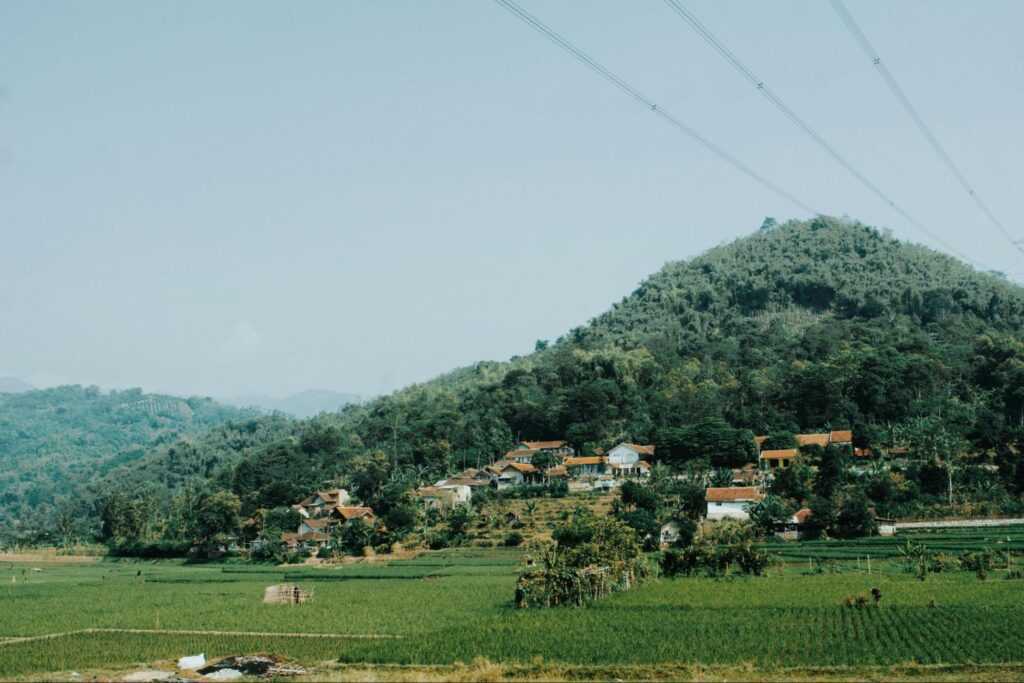
When people picture Europe, they often imagine majestic boulevards, monumental squares and crowded city viewpoints. Yet the continent’s deeper character lives somewhere else entirely: in small, slightly sleepy villages where church bells still set the rhythm of the day, where the bakery sells out before noon, and where the night sky is actually dark. These are the places that rarely appear in glossy brochures but linger in your memory far longer than any famous landmark.
On the train between dazzling capitals, you might stare out at rolling fields and forested hills, check messages, skim a news feed, maybe tap briefly into something distracting like crazy time app game, and never realise that a few kilometres away lies a stone village with crooked lanes, a single tiny café, and a history stretching back centuries.
Why Do Hidden Villages Still Exist?
At first glance, it can seem surprising that so many small towns remain relatively unknown in an era of cheap flights, travel blogs and endless photo-sharing. Part of the explanation is simply geography. Mountain valleys, coastal inlets and remote plateaus were difficult to reach for centuries, and even now they may sit far from major highways or train lines. Few visitors are willing to rent a car, navigate narrow roads and risk the possibility of finding “nothing to do.”
Another factor is economics. Many of these settlements were built around agriculture, mining or small-scale crafts. As industries changed or faded, younger generations moved away, leaving behind a stable but aging population. Without large hotels or aggressive marketing budgets, the villages never made it onto the international tourist map. This absence, however, is exactly what preserves their quiet charm: there is no pressure to redesign the main square or turn every house into a rental.
Community Life Behind the Postcard
Seen from a passing car, a hidden village looks like a postcard: tiled roofs, a modest church tower, maybe a stone bridge over a clear stream. Stay a little longer, though, and a more complicated picture appears. The social fabric is dense and often conservative. People know who you are, who your parents were, and sometimes what your grandparents did for a living. Privacy is thinner; reputation matters.
This can feel stifling or deeply reassuring, depending on your expectations. On the one hand, social norms are strong—everyone notices if you skip a local festival or fail to greet neighbours. On the other hand, help is rarely far away. A car breakdown, an illness, or a sudden storm becomes a shared issue rather than a purely individual problem. In these communities, identity is not just an internal story; it is something continuously negotiated with the people around you.
Architecture, Landscape, and the Sense of Time
Hidden villages also offer a physical lesson in how people have adapted to their environment over centuries. Houses cling to hillsides to catch winter sunlight; streets twist and narrow to block icy winds; courtyards are arranged to make the most of shade in summer. The aesthetic may appear charmingly random, but behind it sits a long trial-and-error dialogue with climate and terrain.
Unlike many modern districts, where buildings follow a standardized pattern, small European towns often show layers of time: a medieval wall repurposed as a garden boundary, a modest nineteenth-century schoolhouse beside a contemporary playground, a half-renovated farmhouse with new windows but an old wooden door worn shiny by generations of hands. Walking through such places, you sense that time is not a straight line but a stack of overlapping stories.
The Quiet Politics of Being “Off the Map”
Being off the tourist radar is not always a neutral condition. For some residents, it means being overlooked in national decision-making, with fewer services and less investment. Young people may feel trapped between loyalty to their roots and the desire for education and opportunities only available in larger cities. A pretty façade can hide an undercurrent of frustration.
At the same time, many locals are ambivalent about attracting too much attention. They have watched nearby destinations transformed by crowds: prices rising, traditional shops replaced by souvenir stands, public spaces reshaped around visitors rather than residents. Remaining invisible can start to look like a protective strategy. The village is “discovered” only by those persistent enough to follow faint hints, stray recommendations or their own curiosity.
Tourism, Gentrification and the Fragile Balance
When hidden villages begin to appear on travel lists, a delicate balancing act starts. A certain amount of tourism brings welcome income and can help preserve historic buildings and local crafts. New cafés open, guesthouses appear, small museums are created. But beyond a certain point, the scale tips. Seasonal rentals push out long-term tenants; bakeries stock more snacks for visitors than staples for residents; the rhythm of the place shifts toward the weekend rather than the calendar of local life.
This process is not inevitable, but it is common. How it unfolds depends on local governance, regional policies and the attitudes of visitors themselves. Some communities actively limit development or create rules about what can be renovated and how. Others embrace rapid change, hoping it will keep the village alive, even if it alters the character that made it special.
How to Approach Small Towns Respectfully
For outsiders, the question is not only how to find these hidden villages, but how to behave once they arrive. Respect begins with simple gestures: learning how to greet people, understanding that certain spaces—like cemeteries or small chapels—are primarily for residents, recognising that loud behaviour late at night carries further in a quiet valley than in a big city.
It also means accepting that not everything is designed for your convenience. Shops may close early, menus might not be translated, and public transport could be infrequent. Rather than demanding changes, a patient visitor adapts to the local rhythm. Taking the time to learn a few words of the local language, asking before photographing people, and spending money in small family-run businesses are all ways of signalling that you see the village as more than just a backdrop.
Hidden Villages as Mirrors of Europe
Analytically, Europe’s hidden villages act as mirrors, reflecting tensions that run through the wider continent: between modernisation and continuity, mobility and rootedness, individual desire and communal obligation. In the cities, these issues often feel abstract or are mediated through policy debates and headlines. In a small town, they show up directly—when a school closes because there are too few children, or when a long-running family business struggles to compete with supermarkets in a distant retail park.
And yet, there is resilience. Seasonal festivals continue, even if fewer young people join. Old houses are quietly renovated by returning descendants or new arrivals seeking a slower life. Gardens are tended, local recipes kept alive, small associations organise concerts or markets. The village persists, not as a museum, but as a living, evolving place.
Why They Matter, Even If You Never Visit
You may never set foot in these villages, and that is perfectly possible in a lifetime of European travel. Yet they matter as much as any celebrated boulevard or monumental square. They remind us that a continent is made not only of capitals and spectacular views, but also of humbler places where people live out their days in modest, steady routines.
Hidden villages carry a quiet kind of knowledge: how to inhabit a landscape without overwhelming it, how to maintain social ties in small populations, how to weave history into daily life without turning it into a performance. Whether you glimpse them from a distant train window or wander their narrow streets one afternoon, they offer a different way of imagining what Europe is and could be—less flashy, more intricate, and quietly, stubbornly alive.